
Summarize this post with AI
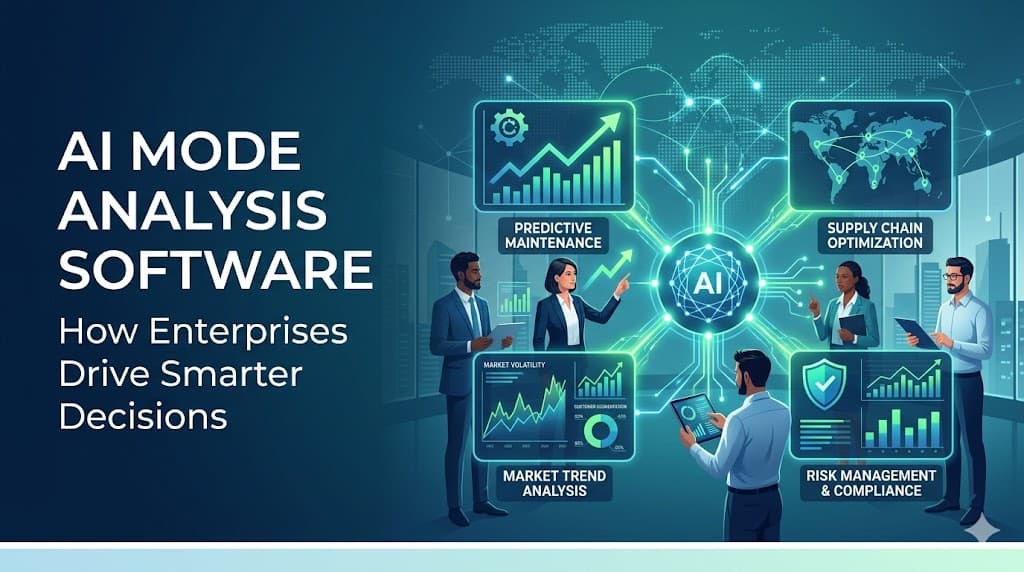
How do organizations optimize infrastructure costs while scaling machine learning? The answer lies in deploying AI Mode Analysis Software for b2b solutions. These systems evaluate data pipelines and computational loads to select the most efficient processing algorithms dynamically. By transitioning from static models to adaptive frameworks, operations teams reduce GPU expenditure and minimize latency during peak demand. Integrating these platforms with comprehensive enterprise AI analytics tools ensures total visibility into resource allocation and system health. Furthermore, utilizing advanced predictive analytics within this architecture allows infrastructure to anticipate load changes rather than just reacting to them. This advisory brief breaks down the architectural requirements and financial impacts of adopting mode-aware intelligent systems for corporate IT environments.
Why Enterprises Are Shifting to AI Mode Analysis Software
Modern enterprises are dealing with unpredictable workloads, real-time data streams, and increasing pressure to justify AI ROI. Traditional systems fail because they operate on fixed configurations.
AI Mode Analysis Software changes this by introducing dynamic intelligence into infrastructure. Instead of reacting to spikes, systems anticipate them using predictive analytics, ensuring smoother performance and lower costs.
To operationalize this shift, organizations often depend on specialized workflow automation consulting to design adaptive pipelines, automate decision logic, and align infrastructure with real-time business needs.
For enterprises operating in B2B environments, AI Mode Analysis Software for b2b enables seamless coordination across distributed systems, improving efficiency across supply chains, finance, and customer operations.
According to McKinsey & Company, companies that adopt AI-driven optimization strategies can significantly improve operational efficiency and reduce costs making adaptive AI a strategic priority.
Core Benefits of AI Mode Analysis Software
Dynamic Efficiency
Enterprises no longer need to run high-performance models continuously. The system automatically switches modes based on workload complexity, ensuring optimal compute utilization.
Scalability Without Waste
Unlike traditional autoscaling, which reacts slowly, ai mode analysis software enterprise solutions adjust instantly handling traffic spikes without over-provisioning resources.
Financial Transparency
When integrated with AI-powered business intelligence, enterprises can map infrastructure usage directly to business outcomes making cost optimization measurable.
Proactive Decision-Making
By leveraging predictive analytics, systems forecast demand patterns, enabling smarter resource allocation before bottlenecks occur.
Assess Your AI Readiness Before You Scale
What Does This Mean in 2026?
By 2026, static AI deployment models are no longer viable. Enterprises are expected to adopt adaptive systems that continuously optimize performance in real time.
This transformation depends on three foundational pillars:
Governance & Compliance
Adaptive AI must operate within structured frameworks. Learn how this works in AI governance for enterpriseContinuous Data Readiness
Systems must constantly update themselves with fresh data inputs using data discovery for AIReal-Time Execution
Intelligent switching relies heavily on real-time AI inference
Together, these ensure that AI Mode Analysis Software operates efficiently at scale, especially in complex AI Mode Analysis Software for b2b environments where real-time coordination is critical.
How Do Core Solutions Compare?
Solution Provider | Primary Focus | Adaptability Speed | Best Use Case | Cost Efficiency Impact |
Samta.ai Services | Adaptive ML Data Fabrics | Millisecond-level | Enterprise-wide orchestration | High – minimizes GPU waste through dynamic optimization |
Legacy BI Tools | Retrospective reporting | Scheduled | Historical insights | Low – no real-time optimization, higher idle compute costs |
Cloud Autoscalers | Infrastructure only | Minutes | Basic load handling | Medium – reactive scaling reduces some waste but lacks intelligence |
AIOps Platforms | Monitoring & alerts | Seconds | Incident response | Medium – improves uptime but limited cost optimization capability |
Practical Use Cases Across Industries
Supply Chain & Logistics
AI dynamically adjusts computational intensity to recalculate delivery routes during disruptions reducing delays and operational costs.
Financial Services & Fraud Detection
During unusual transaction spikes, systems automatically increase model sensitivity, enabling better fraud detection without constant high compute usage.
Intelligent Workflow Automation
Adaptive AI modifies processing complexity depending on task requirements. For deeper insight, explore AI-powered workflow automation
Customer Support Optimization
Basic queries are handled using lightweight NLP models, while complex issues trigger more advanced processing improving both speed and customer experience.
Industrial IoT & Predictive Maintenance
Using predictive analytics and real-time AI inference, systems activate high-performance models only when anomalies are detected.
Measure Your AI Model Risk Before It Becomes a Problem
Hidden Challenges Most Enterprises Overlook
Data Fragmentation
Even the best enterprise AI analytics tools fail if data is siloed. Unified data architecture is essential for real-time adaptability.
Mode Thrashing
Frequent switching between modes can increase costs if thresholds are not optimized properly. Careful calibration is required.
Talent & Complexity
Implementing AI Mode Analysis Software requires specialized expertise in AI orchestration, increasing short-term operational overhead.
Decision Framework: When Should You Implement?
You Should Implement If:
Your compute costs are growing faster than business revenue
Your applications face unpredictable traffic spikes
You want to evaluate the 2026 state of AI infrastructure
You Should Delay If:
Workloads are stable and predictable
Data pipelines lack real-time processing capabilities
AI adoption is still limited to pilot projects
How US Enterprises Approach AI Model Analysis Software for B2B
US enterprises evaluate the best AI model analysis software for B2B as a risk, compliance, and ROI driver, not just a technical tool. CTOs and Heads of AI prioritize platforms that integrate with MLOps stacks while enabling continuous monitoring, explainability, and governance. In the US, B2B AI adoption is closely tied to measurable business outcomes teams expect model analysis tools to directly improve accuracy, reduce bias, and support enterprise-scale decision-making. Cross-functional collaboration between AI, data, and compliance leaders ensures the selected software aligns with both regulatory expectations and revenue impact.
How Singapore Companies Choose the Best AI Model Analysis Software for B2B
Singapore-based enterprises approach AI model analysis software for B2B with a strong focus on governance, compliance, and long-term scalability. With regulations shaped by the Personal Data Protection Commission and Monetary Authority of Singapore, organizations prioritize tools that support explainability, fairness, and auditability. B2B AI initiatives are typically led by digital transformation teams, but require validation from compliance and risk leaders. As a result, companies select AI model analysis platforms that provide transparency, documentation, and alignment with enterprise governance frameworks.
Conclusion: Smarter AI, Not Just Bigger AI
The future of enterprise AI is not about using more compute it’s about using it intelligently. ai mode analysis software enterprise solutions enable organizations to scale efficiently, reduce operational costs, and improve performance without compromise.
As B2B ecosystems grow more complex, adopting AI Mode Analysis Software for b2b ensures seamless coordination, smarter automation, and sustainable growth. Enterprises that adopt adaptive AI today will lead tomorrow because efficiency, speed, and intelligence are no longer optional, they are competitive necessities.
Turn Your AI Goals Into an Actionable Strategy
About Samta
Samta.ai is a Singapore-headquartered AI Product Engineering & Data Intelligence partner helping enterprises build production-grade AI systems for regulated and data-intensive environments.We help organizations move beyond experimentation by engineering scalable, explainable, and enterprise-ready AI solutions from data foundations and model development to workflow automation and deployment.
Our capabilities combine deep AI expertise, data engineering, and product engineering to deliver measurable business impact across FinTech, BFSI, cybersecurity, regulatory technology, and enterprise operations.
Our enterprise AI products power real-world intelligence systems:
• TATVA : AI-driven data intelligence platform for governed analytics, monitoring, and operational insights
• VEDA : Explainable and audit-ready AI decisioning engine built for compliance-sensitive enterprise workflows
• CORA-Property Management Solutions: : Predictive intelligence platform for real-estate pricing, portfolio optimization, and investment analytics
Backed by ecosystem partnerships with Microsoft, Databricks, Snowflake, and AWS, Samta.ai delivers agile, cost-efficient AI engineering with faster turnaround and enterprise-grade scalability. Trusted by enterprises across FinTech, BFSI, and digital transformation initiatives, Samta.ai embeds AI governance, data privacy, and compliance-by-design principles directly into the AI lifecycle , enabling organizations to scale AI with transparency, accountability, and operational control.
Enterprises leveraging Samta.ai automate 65%+ of repetitive data, analytics, and decision workflows while maintaining governance, explainability, and measurable business outcomes. Samta.ai provides the strategic consulting, AI engineering, and data modernization expertise needed to align enterprise operations with next-generation AI transformation goals.
FAQs
What defines ai mode analysis software enterprise?
It is an advanced orchestration layer that dynamically evaluates real-time computational demands and adjusts AI model performance accordingly ensuring efficiency and cost control.
How does it integrate with AI-powered business intelligence?
It feeds live performance and cost data into AI-powered business intelligence dashboards, helping teams align infrastructure spending with business outcomes.
Can it reduce cloud computing costs?
Yes. By avoiding unnecessary high-performance processing, enterprises significantly reduce GPU usage. Many organizations rely on workflow automation consulting to implement these optimizations effectively.
What infrastructure is required?
A unified data fabric, low-latency pipelines, and containerized environments are essential for successful deployment.